United Kingdom · Chemistry
GCSE Chemistry — AQA (8462)
Separate chemistry, with the chemistry of Combined Science: Trilogy (8464) included. Foundation and higher tier.
Specification 8462, 1.1, 4 October 2019 · for exams in 2027
- Topics
- 85
- Topic guides
- 28
- Simulations
- 17
Every part of the AQA GCSE Chemistry specification, in the order AQA sets it out: from atomic structure and bonding to quantitative chemistry, rates, organic chemistry and using resources. Each topic links to the simulations that show the idea, so you can build an atom shell by shell, turn a molecule or a crystal lattice in 3D, or watch particles collide faster as a mixture warms up.
Combined Science: Trilogy students learn most of the same chemistry. Topics that only separate chemistry students sit are marked, and Higher tier content is labelled, so you can see straight away which parts of the course apply to you.
In short
How should I revise GCSE Chemistry for AQA?
Take the ten AQA topic areas one at a time. For each, make sure you can explain the idea with a picture of the particles or electrons, then practise the calculations, such as moles and percentage yield, until each step is routine. Check which topics are Higher tier or separate chemistry only, and finish every topic with timed exam-style questions.
What the course covers
Work through the chapters in order, or go straight to the one you are revising. Every topic links to the simulation that shows it.
- 024.1
Atomic structure and the periodic table
- Atoms, elements and compounds
- Mixtures and separating them
- How the model of the atom developed
- Protons, neutrons, electrons and the size of atoms
- Relative atomic mass and isotopes
- Electronic structure
- The periodic table and its history
- Metals and non-metals
- Group 0: the noble gases
- Group 1: the alkali metals
- Group 7: the halogens
- Transition metals
- 034.2
Bonding, structure and the properties of matter
- Ionic bonding and ionic compounds
- Covalent bonding
- Metallic bonding
- States of matter and state symbols
- Properties of ionic compounds and small molecules
- Polymers and giant covalent structures
- Properties of metals and alloys
- Diamond, graphite, graphene and fullerenes
- Nanoparticles
- 044.3
Quantitative chemistry
- Conservation of mass and balanced equations
- Relative formula mass
- Apparent mass changes when a gas is involved
- Uncertainty in chemical measurements
- Moles and the Avogadro constant
- Reacting masses, balancing with moles and limiting reactants
- Concentration of solutions in g/dm3
- Percentage yield
- Atom economy
- Concentration in mol/dm3
- Volumes of gases
- 054.4
Chemical changes
- Metal oxides and the reactivity series
- Extracting metals by reduction
- Oxidation and reduction in terms of electrons
- Reactions of acids with metals
- Neutralisation and making soluble salts
- The pH scale and neutralisation
- Titrations
- Strong and weak acids
- Electrolysis and molten ionic compounds
- Using electrolysis to extract metals
- Electrolysis of aqueous solutions
- Half equations at electrodes
- 064.5
Energy changes
- Exothermic and endothermic reactions
- Reaction profiles
- Bond energies
- Chemical cells and batteries
- Hydrogen fuel cells
- 074.6
The rate and extent of chemical change
- Measuring and calculating rates
- Factors that change the rate
- Collision theory and activation energy
- Catalysts
- Reversible reactions and equilibrium
- Changing the conditions at equilibrium
- 084.7
Organic chemistry
Crude oil, hydrocarbons and alkanes · Fractional distillation and petrochemicals · Properties and combustion of hydrocarbons · Cracking and alkenes · Alkenes and their reactions · Alcohols · Carboxylic acids and esters · Addition polymerisation · Condensation polymers and amino acids · DNA and other natural polymers
10 topics - 094.8
Chemical analysis
- Pure substances and formulations
- Paper chromatography
- Tests for common gases
- Flame tests
- Tests for metal ions, carbonates, halides and sulfates
- Instrumental methods and flame emission spectroscopy
- 104.9
Chemistry of the atmosphere
The atmosphere now and in the past · Greenhouse gases and climate change · Pollutants from fuels
3 topics - 114.10
Using resources
Using Earth's resources sustainably · Potable water · Waste water treatment · Alternative ways to extract metals · Life cycle assessment and recycling · Corrosion and its prevention · Useful alloys · Ceramics, polymers and composites · The Haber process · NPK fertilisers
10 topics2 simulations
MCQs by chapter
Every multiple-choice question from a chapter on one page, with answers, explanations and a score at the end.
Simulations for this course
See each idea move before you read about it. They all run in your browser, free.
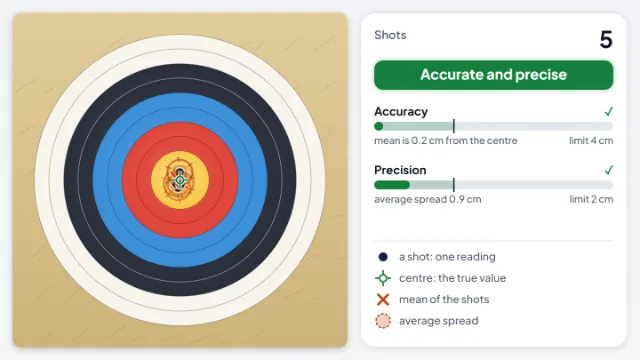
- Accuracy, precision and errorsWorking scientifically
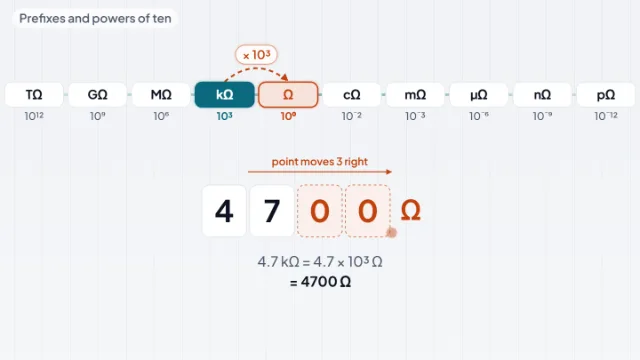
- Significant figures, prefixes and units trainerWorking scientifically
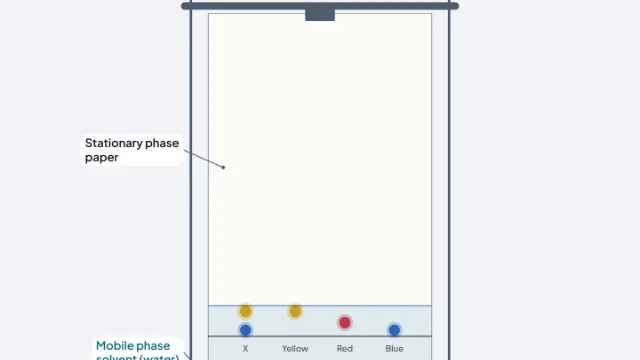
- Paper chromatography (solvent front, spots and Rf values)Atomic structure and the periodic table
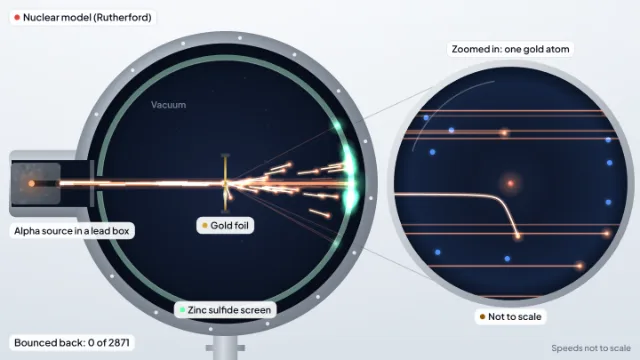
- Atomic models and Rutherford scatteringAtomic structure and the periodic table
- Isotopes and atom builderAtomic structure and the periodic table
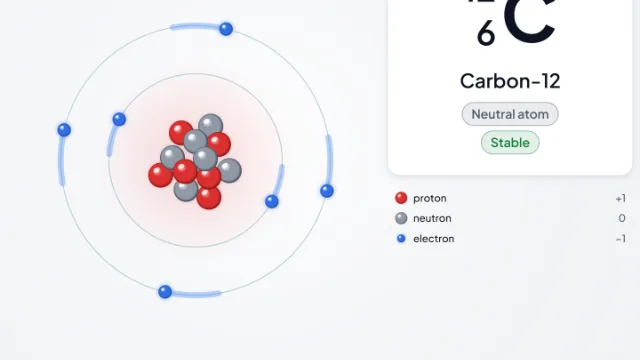
- Electron shells in 3D (atoms and ions up to calcium)Atomic structure and the periodic table
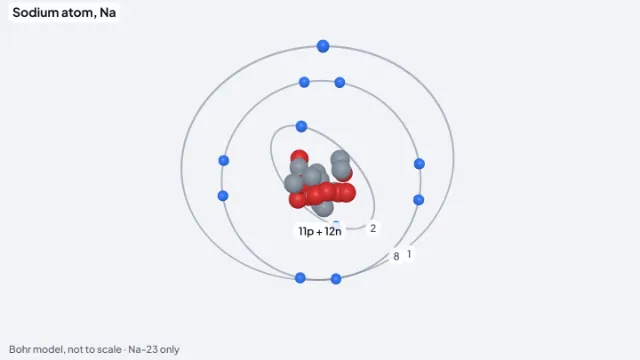 3D
- Giant structures in 3D (sodium chloride, diamond, graphite and metals)Atomic structure and the periodic table
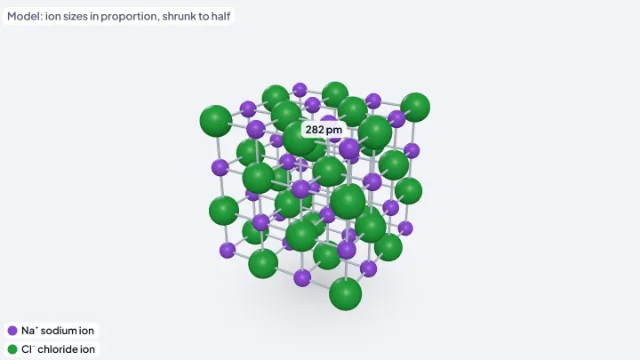 3D
- Covalent molecules in 3D (ball-and-stick, space-filling and shared pairs)Atomic structure and the periodic table
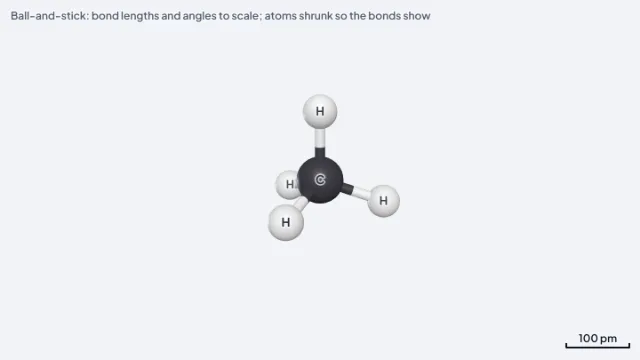 3D
- Reactivity series and displacement in 3D (metals in salt solutions)Atomic structure and the periodic table
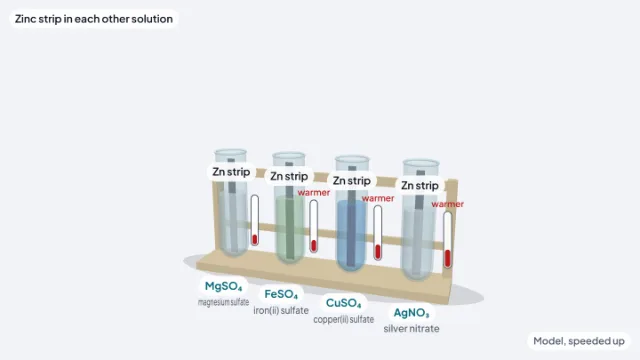 3D
- Collision theory in 3D (temperature, concentration, surface area and catalysts)Atomic structure and the periodic table
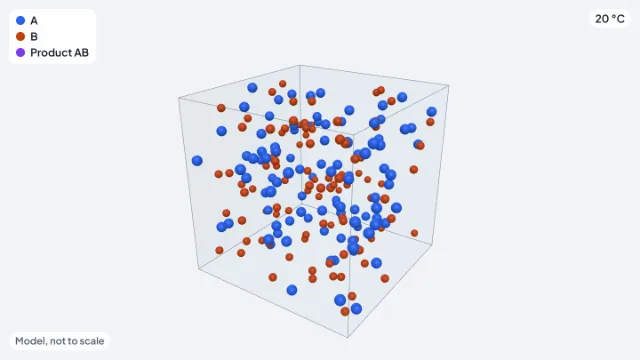 3D
- Flame tests in 3D (identifying metal ions by flame colour)Atomic structure and the periodic table
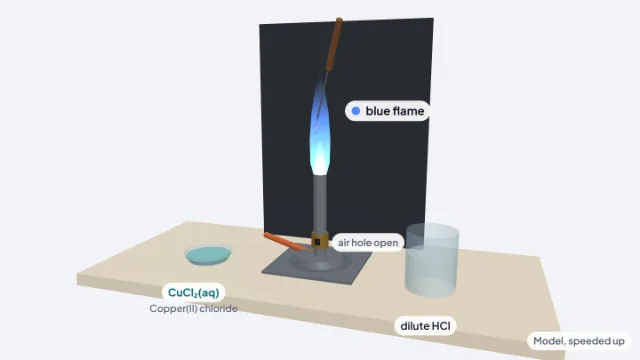 3D
- Ionic bonding in 3D (electron transfer and the ions formed)Bonding, structure and the properties of matter
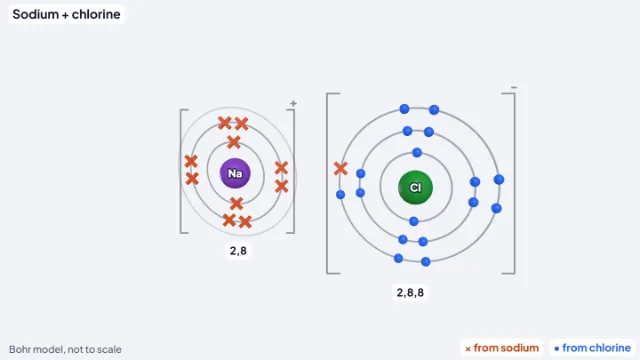 3D
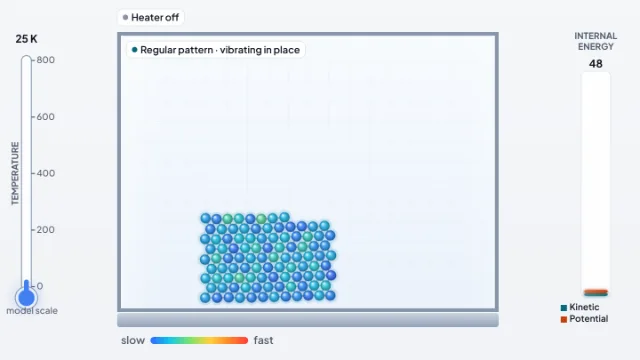
- Particle model and states of matterBonding, structure and the properties of matter
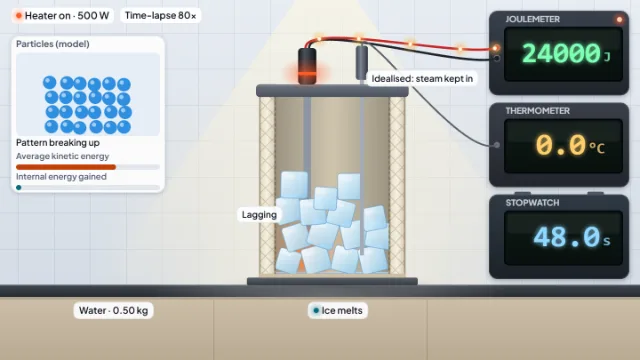
- Latent heat and heating curvesBonding, structure and the properties of matter
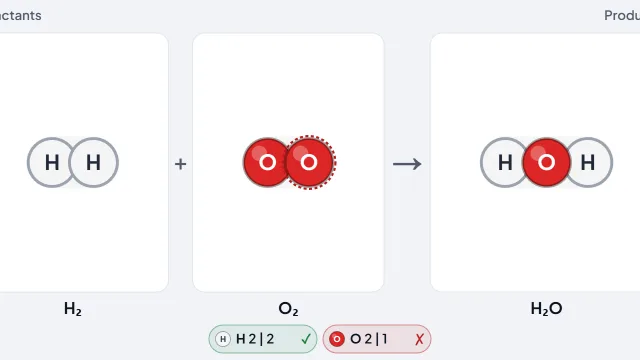
- Balancing chemical equations (atom counts and state symbols)Quantitative chemistry
- Electrolysis in 3D (molten and aqueous compounds, products at each electrode)Chemical changes
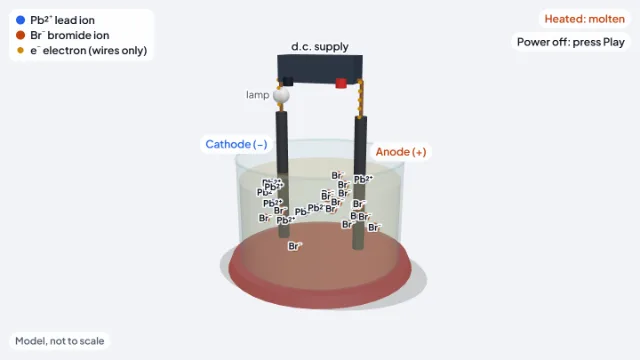 3D
- Exothermic and endothermic reactions (temperature change and energy profiles)Energy changes
Practicals
The practicals named in this course. Open a virtual practical to take readings and plot your own results.
- Electrolysis of aqueous solutionsRequired practical 3Virtual practical
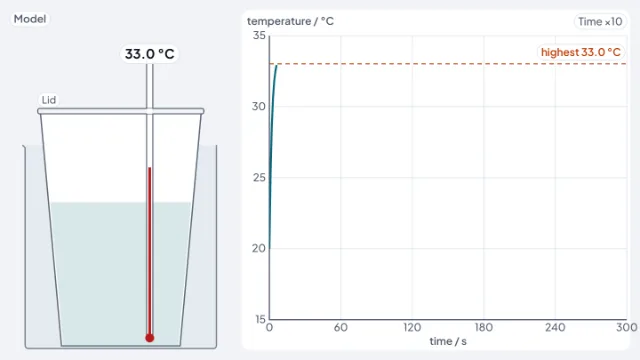
- Temperature changes in reactionsRequired practical 4Virtual practical
- Paper chromatography and Rf valuesRequired practical 6Virtual practical
- Identifying ions in unknown compoundsRequired practical 7 — chemistry onlyVirtual practical
Next step
Ready? Start with Working scientifically
Read each topic guide, try the simulation, then check yourself with the quick questions at the end.