GCSE AQA Chemistry · 4.2 · Chapter 3 of 11
Bonding, structure and the properties of matter
9 topics7 of 9 topic guides ready6 simulations
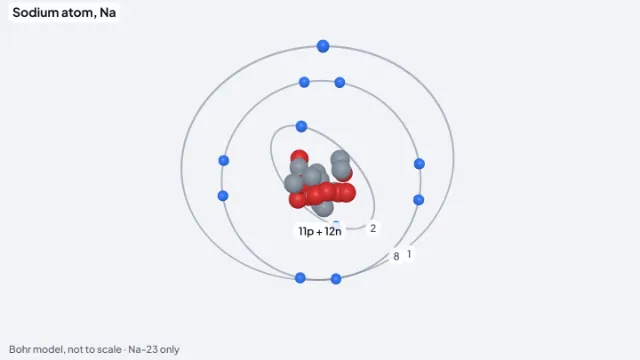
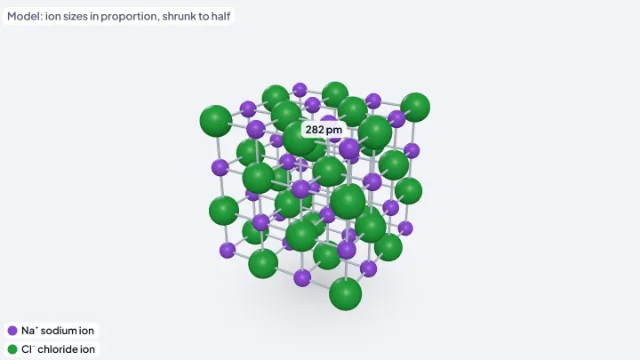
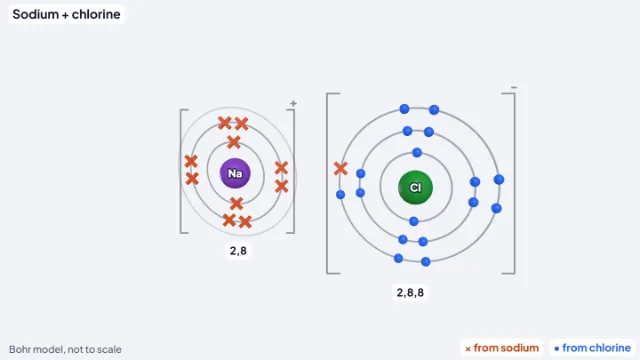
Ionic bonding and ionic compounds
Topic guide4.2.1.14.2.1.24.2.1.3Electron transfer from metal to non-metal atoms, dot-and-cross diagrams, giant lattices and working out the formula.
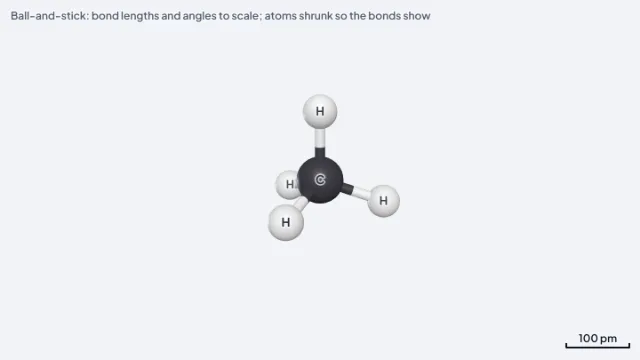
Covalent bonding
Topic guide4.2.1.4Shared electron pairs in small molecules, polymers and giant structures, drawn as dot-and-cross, line and 3D models.
Metallic bonding
Topic guide4.2.1.5Positive ions in a sea of delocalised electrons.
States of matter and state symbols
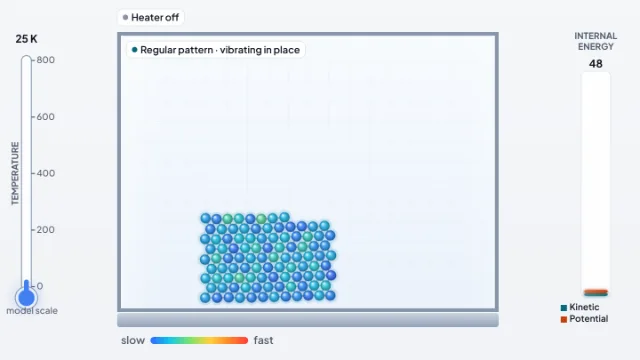
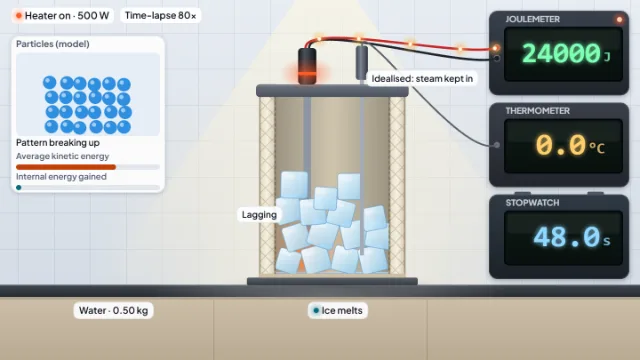
Topic guide4.2.2.14.2.2.2Particle model of solids, liquids and gases, how bond strength sets melting and boiling points, and (s), (l), (g), (aq).
Properties of ionic compounds and small molecules
Topic guide4.2.2.34.2.2.4Why ionic compounds melt high and conduct when molten or dissolved, and why small molecules melt low and do not conduct.
Polymers and giant covalent structures
Topic guide4.2.2.54.2.2.6Long-chain polymers are solid at room temperature; giant covalent lattices have very high melting points.
Properties of metals and alloys
Topic guide coming soon4.2.2.74.2.2.8Layers of ions slide, so metals bend; alloys distort the layers and are harder; delocalised electrons carry charge and heat.
Diamond, graphite, graphene and fullerenes
Topic guide4.2.3.14.2.3.24.2.3.3How each form of carbon is bonded, and how that explains hardness, conduction and uses.
Nanoparticles
Topic guide coming soon4.2.4.14.2.4.2Separate chemistry onlyParticle size ranges, surface area to volume ratio, and uses and possible risks of nanoparticles.
Next step
Start with Ionic bonding and ionic compounds
The first topic guide in this chapter, with its simulation, worked examples and exam-style questions.