Pakistan · Chemistry
Punjab Board Class 9 Chemistry
New syllabus (National Curriculum 2023), English medium, chapter by chapter.
Textbook: PCTB Chemistry 9, National Curriculum of Pakistan 2023 (experimental edition) · for exams in 2027
- Topics
- 60
- Topic guides
- 11
- Simulations
- 15
The new Punjab Class 9 Chemistry book, chapter by chapter in English: all thirteen chapters, from states of matter and atomic structure through bonding, stoichiometry, energetics and equilibria to hydrocarbons, empirical data and laboratory skills. Topics follow the book's own section numbers, so you can find your place quickly.
Wherever an idea is easier to understand by seeing it, the section links to a simulation: build an atom shell by shell, turn a molecule in 3D or watch how temperature changes the speed of particles.
In short
What chapters are in the Class 9 Chemistry new syllabus in Punjab?
The new Class 9 Chemistry book has thirteen chapters: states of matter and phase changes, atomic structure, chemical bonding, stoichiometry, energetics, equilibria, acid–base chemistry, the periodic table and periodicity, group properties of elements, environmental chemistry, hydrocarbons, empirical data collection and analysis, and laboratory and practical skills.
What the course covers
Work through the chapters in order, or go straight to the one you are revising. Every topic links to the simulation that shows it.
- Chapter 1
States of matter and phase changes
- What chemistry is and its branches
- States of matter
- Elements, compounds and mixtures
- Allotropes
- Solutions, colloids and suspensions
- Solubility and saturated solutions
- Chapter 2
Atomic structure
- Discovering electrons, protons, neutrons and the nucleus
- Bohr model, shells and subshells
- Atomic number and mass number
- Isotopes and radioactive isotopes
- Relative atomic mass
- Chapter 3
Chemical bonding
- Why atoms form bonds
- Ionic bonding
- Covalent bonding
- Polar and non-polar bonds
- Coordinate (dative) bonds
- Metallic bonding
- Intermolecular forces
- Comparing ionic and covalent substances
- Chapter 4
Stoichiometry
Chemical formulae and ionic compounds · Empirical and molecular formulae · Avogadro's number, the mole and molar mass · Writing chemical and ionic equations · Calculations from equations
5 topics1 simulation - Chapter 5
Energetics
- System and surroundings
- Enthalpy and enthalpy change
- Exothermic and endothermic reactions
- Enthalpy change from bond energies
- Activation energy and catalysts
- Aerobic and anaerobic respiration
- Chapter 6
Equilibria
Reversible and irreversible changes · Dynamic equilibrium · Changing the conditions of a reversible reaction
3 topics - Chapter 7
Acid–base chemistry
Acids, bases and alkalis · Arrhenius acids and bases; strong and weak · Brønsted–Lowry acids and bases · Reactions of acids and bases · Acid rain and its effects
5 topics - Chapter 8
Periodic table and periodicity
The modern periodic table · Similar properties in a group · Atomic radius, ionisation energy, electron affinity and electronegativity · Metallic character, reactivity and density
4 topics1 simulation - Chapter 9
Group properties and elements
Group 1 elements · Group 17 elements · Transition elements · Noble gases · Physical properties of metals and non-metals
5 topics3 simulations - Chapter 10
Environmental chemistry
Composition of the atmosphere · Air pollutants · Formation and effects of acid rain · Global warming and the greenhouse effect · Reducing environmental problems
5 topics - Chapter 11
Hydrocarbons
Hydrocarbons, alkanes and IUPAC names · Preparing alkanes · Reactions of alkanes
3 topics - Chapter 12
Empirical data collection and analysis
SI units and prefixes in chemistry · Accuracy, precision and errors
2 topics3 simulations - Chapter 13
Laboratory and practical skills
Chemical hazards in the laboratory · Hazard signs and protective equipment · Fire extinguishers, showers and emergencies
3 topics
MCQs by chapter
Every multiple-choice question from a chapter on one page, with answers, explanations and a score at the end.
Simulations for this course
See each idea move before you read about it. They all run in your browser, free.
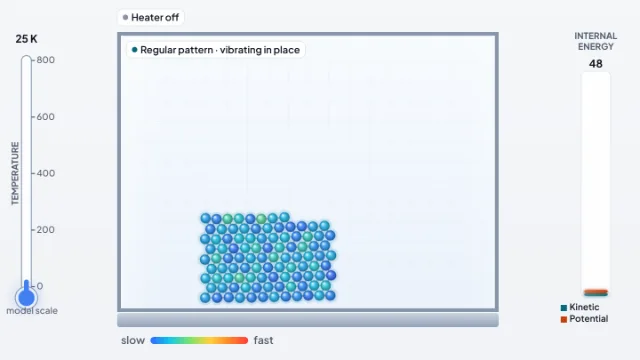
- Particle model and states of matterChapter 1: States of matter and phase changes
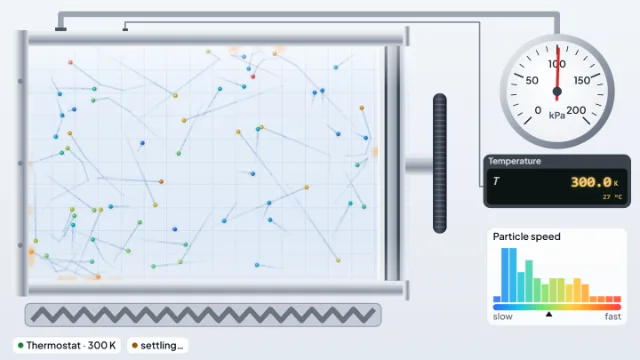
- Gas laws and particlesChapter 1: States of matter and phase changes
- Giant structures in 3D (sodium chloride, diamond, graphite and metals)Chapter 1: States of matter and phase changes
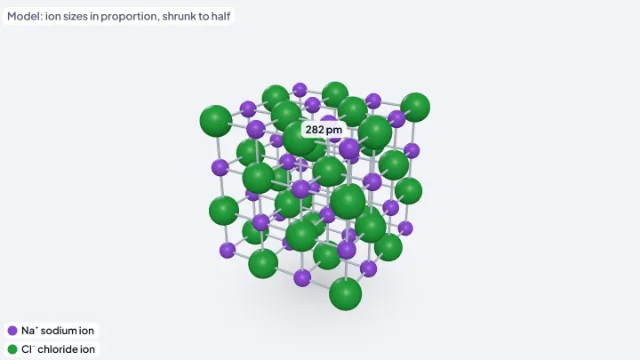 3D
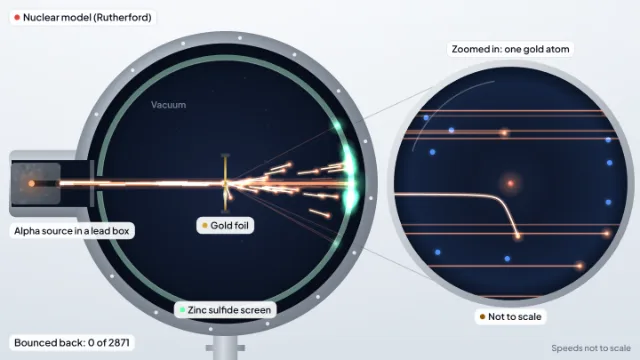
- Atomic models and Rutherford scatteringChapter 2: Atomic structure
- Electron shells in 3D (atoms and ions up to calcium)Chapter 2: Atomic structure
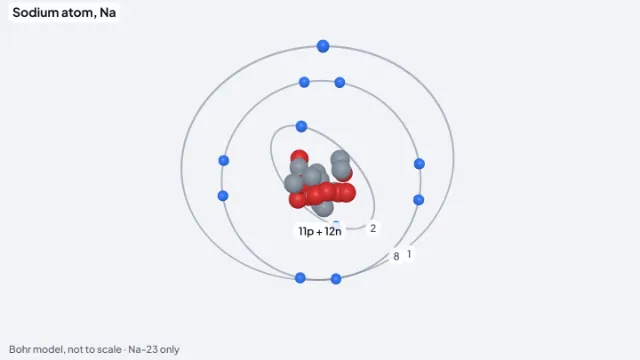 3D
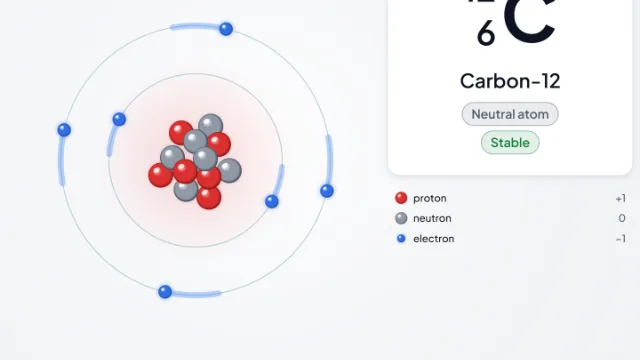
- Isotopes and atom builderChapter 2: Atomic structure
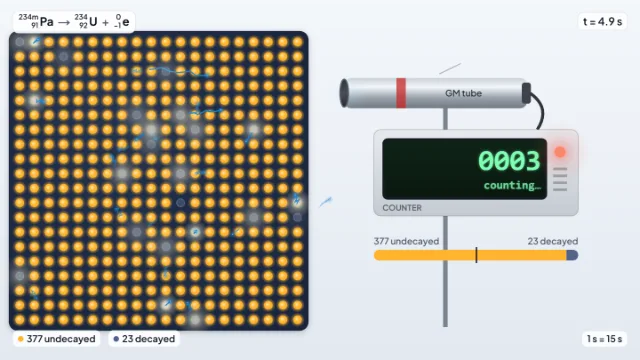
- Radioactive decay and half-lifeChapter 2: Atomic structure
- Ionic bonding in 3D (electron transfer and the ions formed)Chapter 3: Chemical bonding
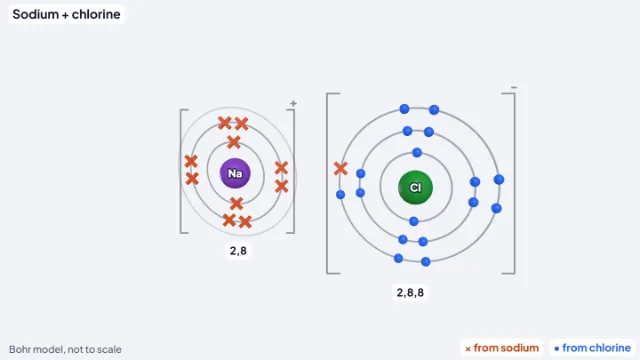 3D
- Covalent molecules in 3D (ball-and-stick, space-filling and shared pairs)Chapter 3: Chemical bonding
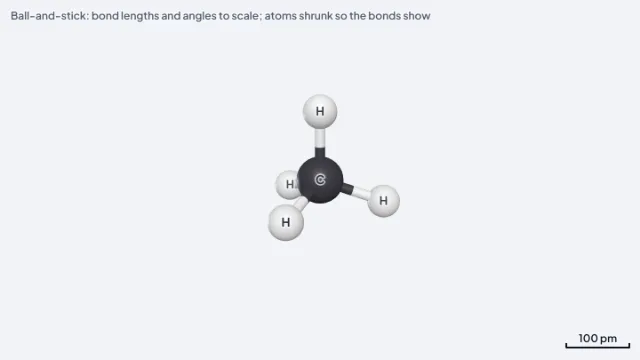 3D
- Balancing chemical equations (atom counts and state symbols)Chapter 4: Stoichiometry
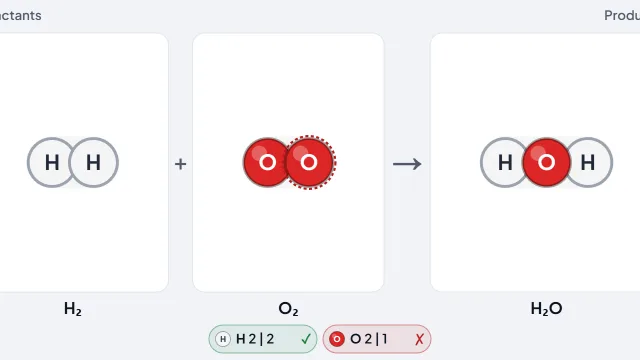
- Exothermic and endothermic reactions (temperature change and energy profiles)Chapter 5: Energetics
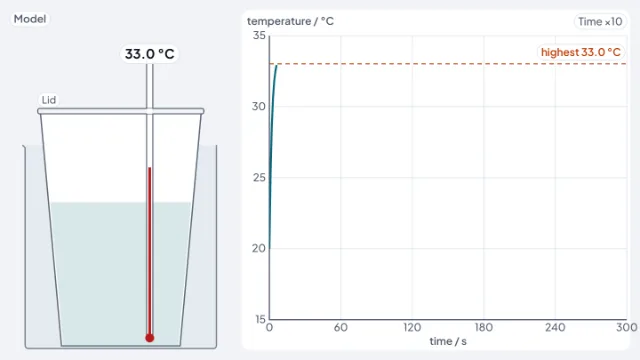
- Collision theory in 3D (temperature, concentration, surface area and catalysts)Chapter 5: Energetics
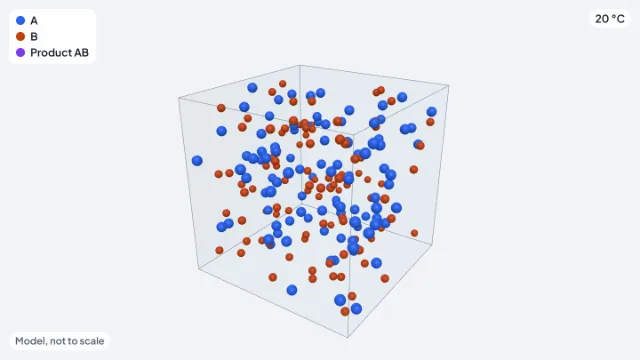 3D
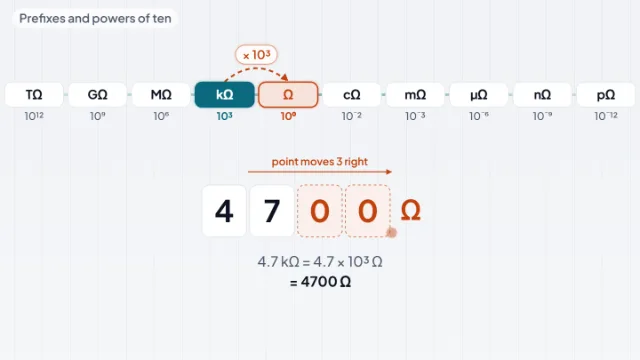
- Significant figures, prefixes and units trainerChapter 12: Empirical data collection and analysis
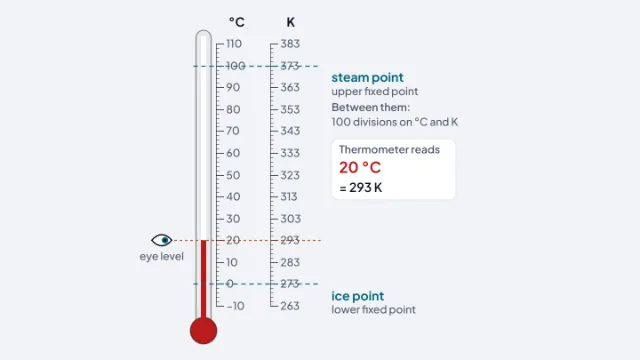
- Temperature scalesChapter 12: Empirical data collection and analysis
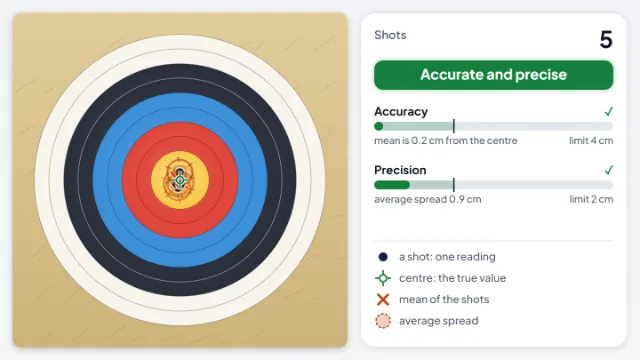
- Accuracy, precision and errorsChapter 12: Empirical data collection and analysis
Next step
Ready? Start with Chapter 1: States of matter and phase changes
Read each topic guide, try the simulation, then check yourself with the quick questions at the end.