International · Chemistry
Cambridge IGCSE Chemistry (0620)
Core and supplement content for the 2026–2028 syllabus, taught in schools around the world.
Syllabus 0620, Version 2, August 2026 (syllabus for exams in 2026, 2027 and 2028) · for exams in 2027
- Topics
- 69
- Topic guides
- 25
- Simulations
- 17
The Cambridge IGCSE Chemistry (0620) syllabus for exams in 2026, 2027 and 2028, split into its twelve topics, from states of matter to experimental techniques and chemical analysis. Each topic lists the simulations that match it, so you can see electron shells, covalent molecules and giant lattices in 3D instead of only as flat diagrams.
Topics made up entirely of Supplement content are labelled, so Core candidates can see where their part of the syllabus stops and Extended candidates know what they need on top.
In short
What is in the Cambridge IGCSE Chemistry 0620 syllabus?
Twelve topics, starting with states of matter, atomic structure, bonding and stoichiometry, then electrochemistry, energy changes, rates and equilibrium, acids and salts, the periodic table, metals, the environment and organic chemistry, and ending with experimental techniques and chemical tests. Core candidates study the Core content; Extended candidates also learn the Supplement, which adds harder ideas and calculations.
What the course covers
Work through the chapters in order, or go straight to the one you are revising. Every topic links to the simulation that shows it.
- 02
Atoms, elements and compounds
- Elements, compounds and mixtures
- Atomic structure
- Electronic configuration
- Isotopes
- Ions and ionic bonds
- Simple molecules and covalent bonds
- Giant covalent structures
- Metallic bonding
- 03
Stoichiometry
- Formulae and equations
- Relative atomic and molecular mass
- Concentration units
- The mole and the Avogadro constant
- Molar gas volume
- Reacting masses, limiting reactants and solution calculations
- Titration calculations
- Empirical and molecular formulae
- Percentage yield, composition and purity
- 04
Electrochemistry
- Electrolysis
- Electroplating
- Ionic half-equations at electrodes
- Hydrogen–oxygen fuel cells
- 05
Chemical energetics
- Exothermic and endothermic reactions
- Reaction pathway diagrams
- Bond breaking, bond making and bond energies
- 06
Chemical reactions
- Physical and chemical changes
- Rate of reaction
- Collision theory
- Reversible reactions
- Equilibrium and changing conditions
- The Haber and Contact processes
- Redox: oxygen gain and loss
- Redox: electrons, oxidation numbers and agents
- 07
Acids, bases and salts
Properties of acids and bases · Indicators and pH · Proton transfer and strong and weak acids · Acidic, basic and amphoteric oxides · Preparing salts
5 topics1 simulation - 08
The Periodic Table
- Arrangement of elements
- Group I: alkali metals
- Group VII: halogens
- Transition elements
- Noble gases
- 09
Metals
- Properties of metals
- Uses of metals
- Alloys
- The reactivity series
- Corrosion of metals
- Extraction of metals
- 11
Organic chemistry
Formulae, functional groups and homologous series · Naming organic compounds · Fuels and fractional distillation · Alkanes · Alkenes and cracking · Alcohols · Carboxylic acids · Polymers and plastics · Repeat units, condensation polymers and proteins
9 topics - 12
Experimental techniques and chemical analysis
- Apparatus and solution vocabulary
- Acid–base titrations
- Chromatography
- Separation and purification
- Tests for anions
- Tests for cations
- Tests for gases
MCQs by chapter
Every multiple-choice question from a chapter on one page, with answers, explanations and a score at the end.
Simulations for this course
See each idea move before you read about it. They all run in your browser, free.
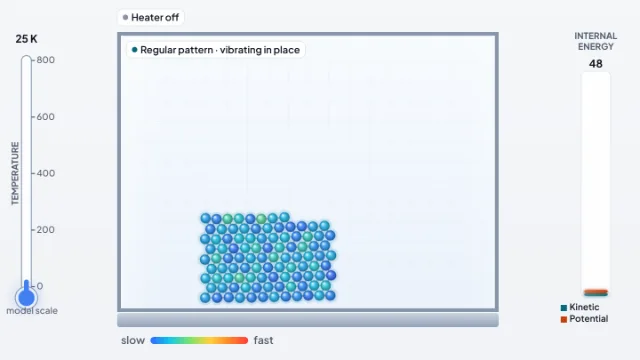
- Particle model and states of matterStates of matter
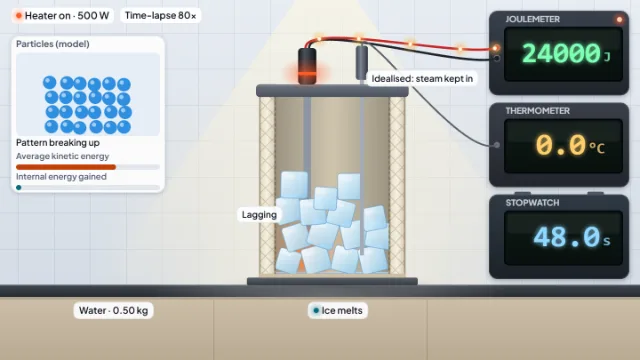
- Latent heat and heating curvesStates of matter
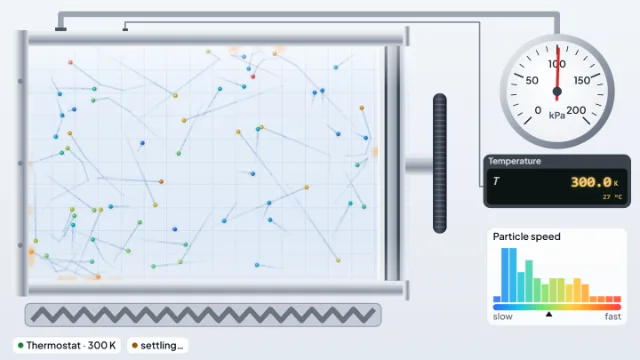
- Gas laws and particlesStates of matter
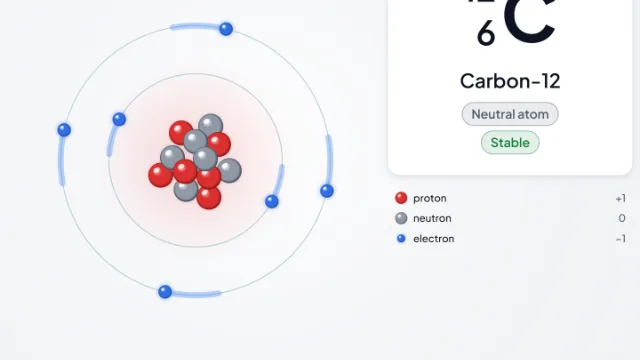
- Isotopes and atom builderAtoms, elements and compounds
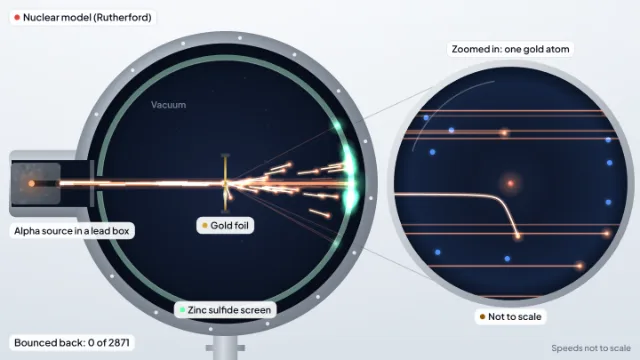
- Atomic models and Rutherford scatteringAtoms, elements and compounds
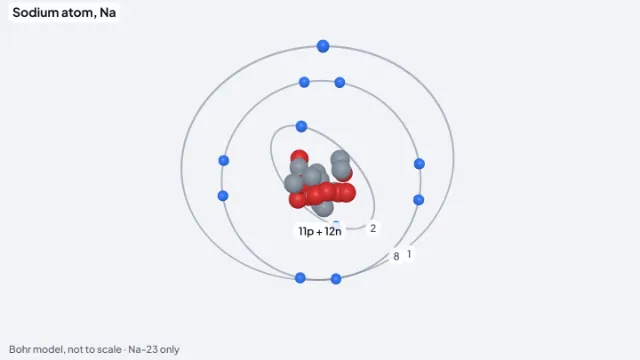
- Electron shells in 3D (atoms and ions up to calcium)Atoms, elements and compounds
 3D
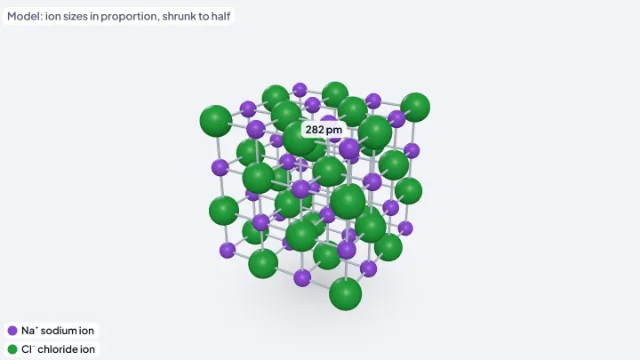
- Giant structures in 3D (sodium chloride, diamond, graphite and metals)Atoms, elements and compounds
 3D
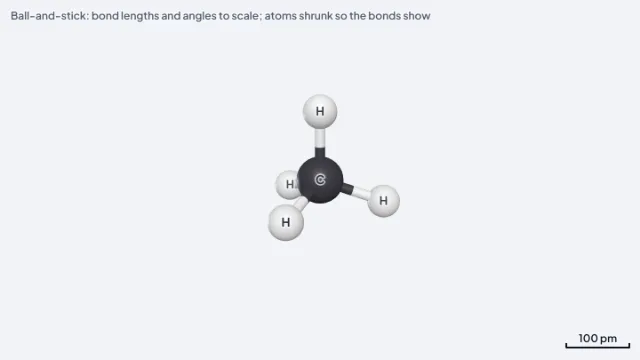
- Covalent molecules in 3D (ball-and-stick, space-filling and shared pairs)Atoms, elements and compounds
 3D
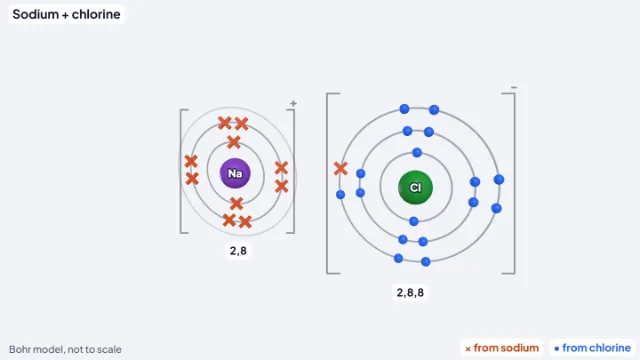
- Ionic bonding in 3D (electron transfer and the ions formed)Atoms, elements and compounds
 3D
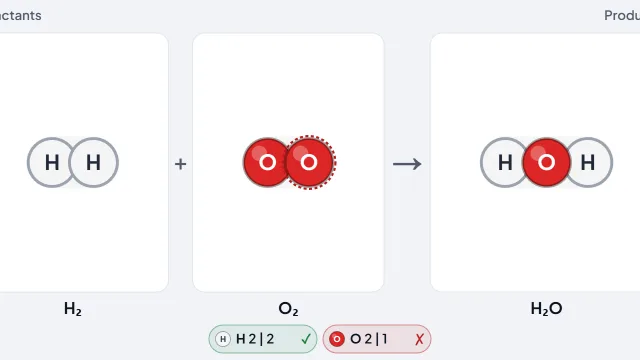
- Balancing chemical equations (atom counts and state symbols)Stoichiometry
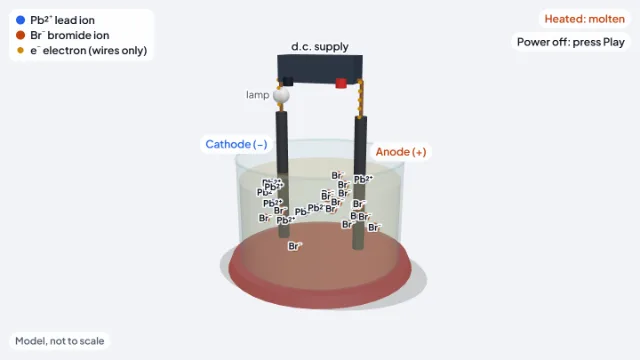
- Electrolysis in 3D (molten and aqueous compounds, products at each electrode)Electrochemistry
 3D
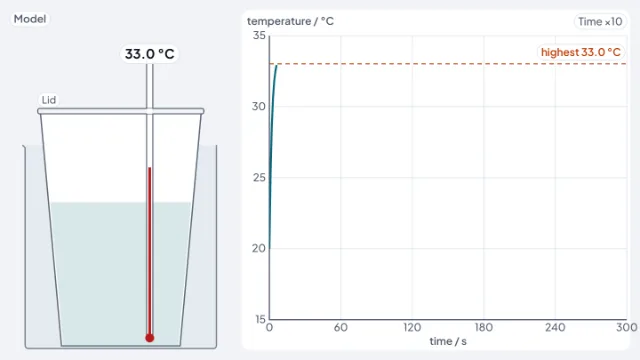
- Exothermic and endothermic reactions (temperature change and energy profiles)Chemical energetics
- Collision theory in 3D (temperature, concentration, surface area and catalysts)Chemical reactions
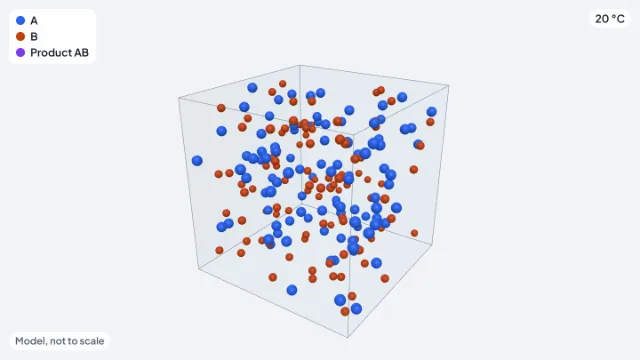 3D
- Reactivity series and displacement in 3D (metals in salt solutions)Metals
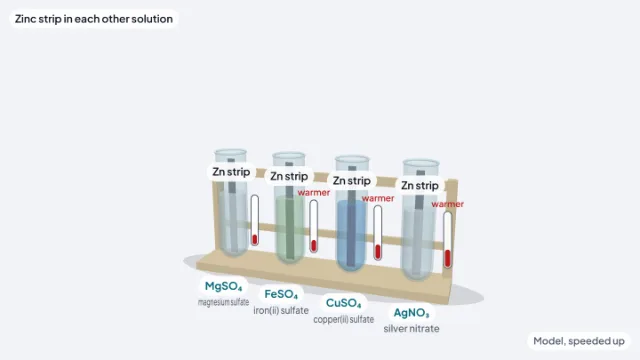 3D
- Accuracy, precision and errorsExperimental techniques and chemical analysis
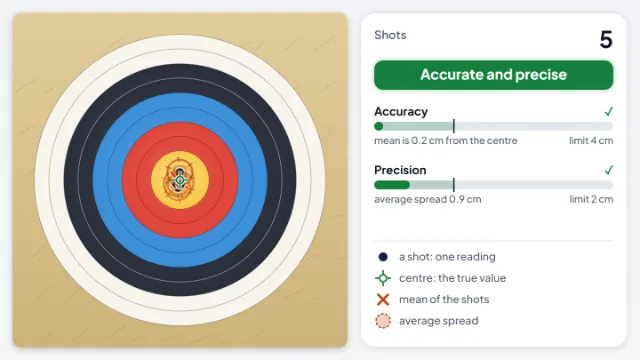
- Paper chromatography (solvent front, spots and Rf values)Experimental techniques and chemical analysis
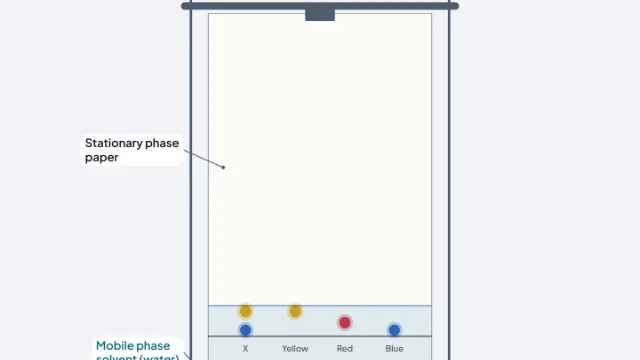
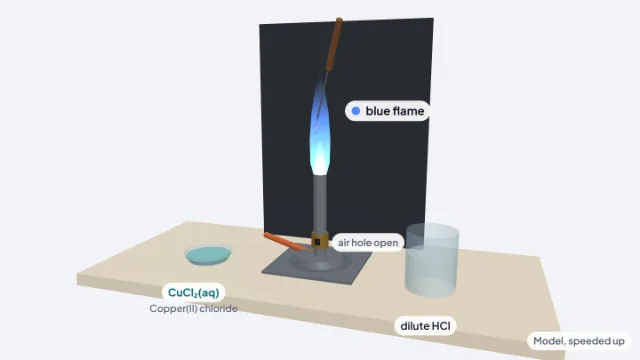
- Flame tests in 3D (identifying metal ions by flame colour)Experimental techniques and chemical analysis
 3D
Practicals
The practicals named in this course. Open a virtual practical to take readings and plot your own results.
- Electrolysis of aqueous solutionsPractical assessment context (Papers 5 and 6)Virtual practical
- Temperature changes in reactionsPractical assessment context (Papers 5 and 6)Virtual practical
- Paper chromatography and Rf valuesPractical assessment context (Papers 5 and 6)Virtual practical
- Identifying ions in unknown compoundsPractical assessment context (Papers 5 and 6)Virtual practical
Next step
Ready? Start with States of matter
Read each topic guide, try the simulation, then check yourself with the quick questions at the end.