GCSE AQA Chemistry · 4.1 · Chapter 2 of 11
Atomic structure and the periodic table
12 topics10 of 12 topic guides ready9 simulations
Atoms, elements and compounds
Topic guide coming soon4.1.1.1Atoms are the smallest part of an element; compounds hold two or more elements in fixed proportions; word and symbol equations.
Mixtures and separating them
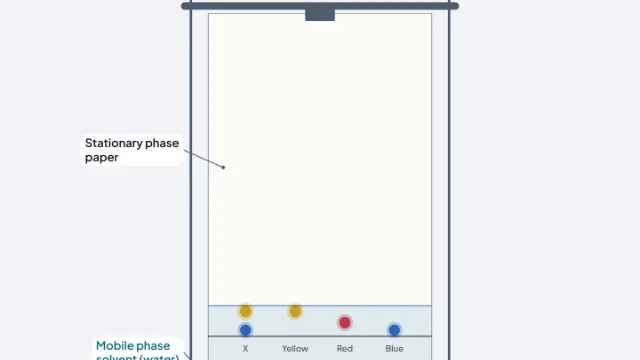
Topic guide coming soon4.1.1.2Mixtures are not chemically joined, so physical methods separate them: filtration, crystallisation, distillation, chromatography.
How the model of the atom developed
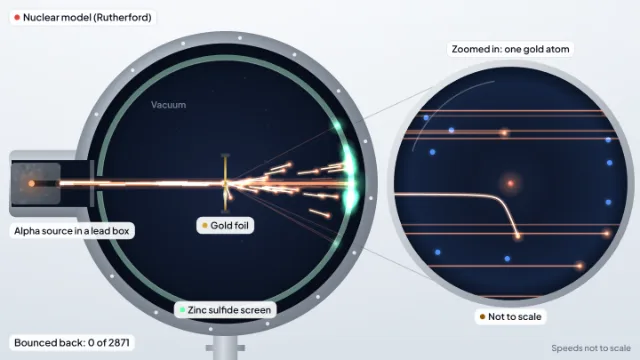
Topic guide4.1.1.3From indivisible spheres to plum pudding, the nuclear model, Bohr's shells and the neutron, and why evidence changed the model.
Protons, neutrons, electrons and the size of atoms
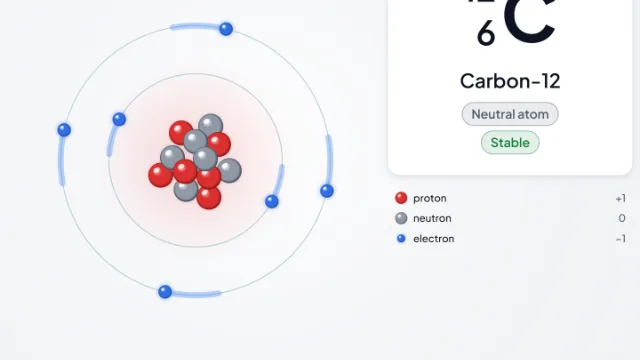
Topic guide4.1.1.44.1.1.5Relative charge and mass of the three particles, atomic and mass number, and the tiny size of atoms and nuclei.
Relative atomic mass and isotopes
Topic guide4.1.1.6Ar is an abundance-weighted mean of isotope masses; calculate it from percentage abundances.
Electronic structure
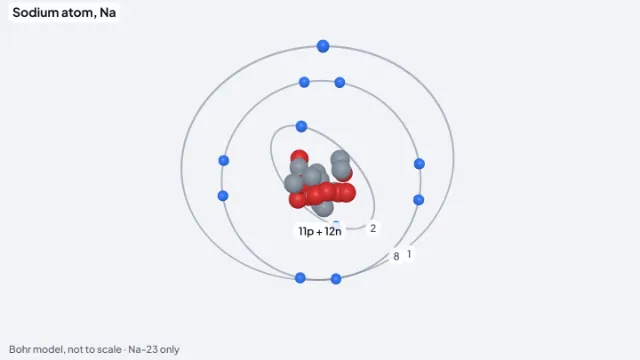
Topic guide4.1.1.7Electrons fill the lowest shells first; write configurations like 2,8,1 for the first 20 elements.
The periodic table and its history
Topic guide4.1.2.14.1.2.2Elements in order of atomic number; groups share outer electrons; how Mendeleev left gaps and predicted elements.
Metals and non-metals
Topic guide4.1.2.3Where metals and non-metals sit in the table, and how metals form positive ions while non-metals tend not to.
Group 0: the noble gases
Topic guide4.1.2.4Full outer shells make them unreactive; boiling points rise down the group.
Group 1: the alkali metals
Topic guide4.1.2.5Reactions with oxygen, chlorine and water, and why reactivity increases down the group.
Group 7: the halogens
Topic guide4.1.2.6Diatomic molecules; reactivity falls and boiling point rises down the group; displacement of less reactive halogens.
Transition metals
Topic guide4.1.3.14.1.3.2Separate chemistry onlyCompared with group 1: harder, denser, higher melting; ions of different charge, coloured compounds and catalysts.
Next step
Start with How the model of the atom developed
The first topic guide in this chapter, with its simulation, worked examples and exam-style questions.