Physics7 min read
The Science of Revising: Which Study Methods Actually Work for Physics and Chemistry
What a major review of learning research found about ten popular study methods, why rereading and highlighting feel useful but are not, and how to turn self-testing and spaced revision into a weekly plan for GCSE, IGCSE and Punjab board physics and chemistry.
Updated
On this page
- What did the 2013 review of study techniques find?
- Why do rereading and highlighting feel like they work?
- How do you use the two best methods in physics and chemistry?
- A weekly revision plan for physics and chemistry
- What does this look like with real science topics?
- Common mistakes
- Is highlighting a waste of time?
- Is it bad to reread my notes?
- How many hours a day should I revise?
- Do these methods work for every subject?
- Where can I find all the study skills guides?
In short
The revision methods that actually work best are practice testing (quizzing yourself) and distributed practice (spreading your revision out over days and weeks). Rereading and highlighting, the two habits most students rely on, came out as low utility in a major review of study techniques.
That review is by John Dunlosky, Katherine Rawson, Elizabeth Marsh, Mitchell Nathan and Daniel Willingham: "Improving Students' Learning With Effective Learning Techniques", Psychological Science in the Public Interest, 2013. The team weighed the experimental evidence on ten common techniques. They asked whether each one helps students of different ages, with different materials, on tests taken days or weeks later.
Here is the catch. In a 2009 survey of 177 university students (Karpicke, Butler and Roediger, Memory), 84% said they reread their notes or textbook, and 55% named rereading as their main method. Only 11% clearly described testing themselves from memory, though more mentioned flashcards (40%) or practice problems (43%), which can work as self-tests if used that way. So most students spend much of their time on the weaker methods.
What did the 2013 review of study techniques find?
The review sorted all ten techniques into three groups.
| Technique | What it means | Rating |
|---|---|---|
| Practice testing | Answering questions or recalling facts without looking | High |
| Distributed practice | Spacing study sessions out over time | High |
| Interleaved practice | Mixing different kinds of problem in one session | Moderate |
| Elaborative interrogation | Asking "why is this true?" and answering it | Moderate |
| Self-explanation | Explaining each step of a worked example to yourself | Moderate |
| Summarising | Writing summaries of what you read | Low |
| Highlighting and underlining | Marking key words while reading | Low |
| Keyword mnemonic | Linking a word to a sound-alike picture | Low |
| Imagery for text | Picturing what a passage describes | Low |
| Rereading | Reading the same material again | Low |
"Low" does not mean useless in every case. It means the evidence was weak, limited to a few kinds of material, or showed small gains. Practice testing and distributed practice helped in study after study, for learners of many ages and on many kinds of test.
Why do rereading and highlighting feel like they work?
When you read a page for the third time, it feels smooth and familiar. Your brain treats that ease as a sign that you know it. But recognising something on the page is not the same as producing it on a blank exam paper.
Henry Roediger and Jeffrey Karpicke showed this in a 2006 experiment (Psychological Science). Students who reread a short science passage, about the Sun or about sea otters, felt more confident than students who tested themselves on it. A week later, the confident rereaders remembered less. Our guide to retrieval practice tells the full story.
Highlighting has a similar trap. Choosing a colour is quick, it looks like work, and it puts off the hard part, which is getting the idea into your head.
How do you use the two best methods in physics and chemistry?
Practice testing is anything that makes you pull the answer out of memory:
- answering exam-style questions without your notes;
- writing a topic from memory on a blank page, then checking it;
- covering an equation and writing it out with units;
- working through a chapter quiz, such as our GCSE physics electricity MCQs or IGCSE chemistry metals MCQs.
Distributed practice means coming back to each topic several times, with days or weeks between visits. Three short sessions spread over a fortnight usually beat one long session of the same total length the night before. The forgetting curve and revision timetable guide shows how long to leave between visits.
The moderate methods are worth adding. Interleaving suits physics calculations: mix speed, energy and electricity questions in one sitting, so you have to decide which equation each one needs. Elaborative interrogation suits chemistry: ask why magnesium displaces copper from copper sulfate, then answer it in your own words. Self-explanation suits worked examples: say why each step follows from the last, then explain the whole method from memory, as in our Feynman technique guide.
A weekly revision plan for physics and chemistry
This plan assumes about an hour on most evenings. Each session tests old topics as well as learning new ones.
| Day | Main task (about 40 min) | Quick test (about 15 min) |
|---|---|---|
| Monday | Physics: learn one new topic, then close the book and write what you remember | Flashcards from last week's chemistry |
| Tuesday | Chemistry: learn one new topic the same way | Write yesterday's physics topic from memory |
| Wednesday | Mixed calculations: physics and chemistry questions in random order | Equation cards with units |
| Thursday | Physics: a chapter quiz on a topic from two or three weeks ago | Redo Monday's mistakes |
| Friday | Chemistry: exam-style questions on an older topic | Redo Tuesday's mistakes |
| Weekend | One timed set of mixed questions, marked honestly | List the topics that went wrong for next week |
Keep a "mistakes list". Every wrong answer goes on it, and each item comes back in a later quick test until you get it right on two different days.
What does this look like with real science topics?
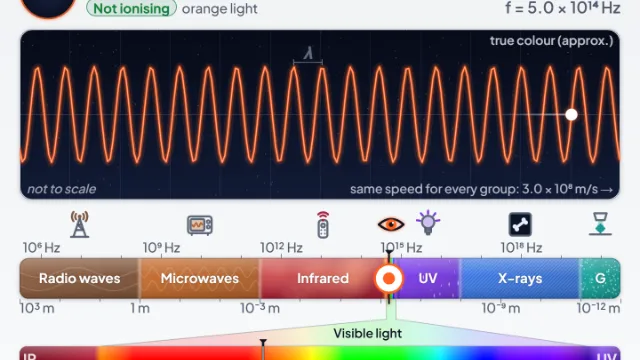
The electromagnetic spectrum. Don't reread the list. Write radio to gamma from memory, then the uses and dangers of each. Check against our memory sentence for the wave order, and repeat after three days. The electromagnetic spectrum simulation lets you test whether you can place each wave by its wavelength.
Equations. Make one card per equation: words on one side, symbols and units on the other. Our list of the AQA recall equations has all of them.
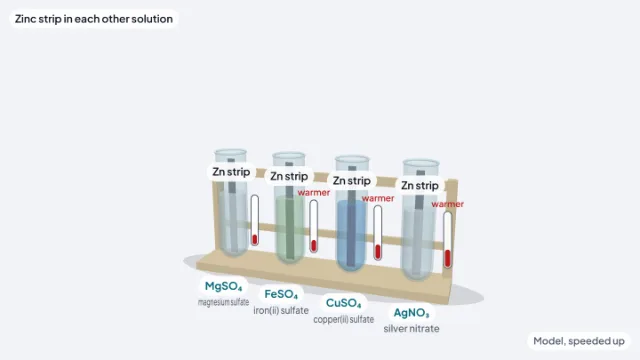
The reactivity series. Write the metals in order from memory, with potassium at the top and copper (AQA) or gold (Cambridge) at the bottom. Then predict whether a metal displaces another from a solution, and check your answers with the displacement reactions simulation and the IGCSE reactivity series notes. If the order will not stick, a memory trick can help you get it onto the page in the first place: our memory palace guide builds one for this list. Then keep testing yourself on it.
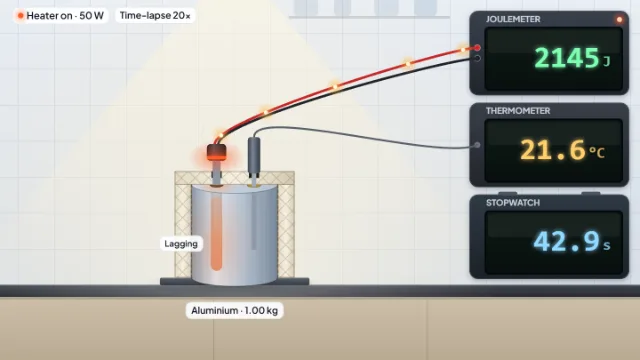
Required practicals. Explain the method aloud with no notes: the equipment, what you measure, how you work out the answer and one source of error. For specific heat capacity, check yourself on the practical page and the specific heat capacity simulation.
Common mistakes
- Making beautiful notes and stopping there. Notes are a starting point. The learning happens when you test yourself on them.
- Testing only what you already know. Questions you get right feel good, but your mistakes list is where the marks are.
- Cramming each topic in one go. A topic finished in one week and never revisited fades fast.
- Checking the answer too early. Struggle for a minute before you look. The effort is part of what makes it stick.
- Choosing methods to suit a "learning style". Matching revision to a visual or auditory style is not backed by evidence, while pairing words with diagrams helps everyone: see our learning styles myth guide.
- Revising one subject for a whole week. Mix physics and chemistry so each gets a gap before you return to it.
Is highlighting a waste of time?
Not completely, but it is weak on its own. If you highlight, turn each highlighted line into a question afterwards and test yourself on it later.
Is it bad to reread my notes?
A quick read to remind yourself before a self-test is fine. The problem is when rereading is the whole session. Swap most of that time for recall.
How many hours a day should I revise?
The research gives no magic number. Regular short sessions that include self-testing do better than rare long ones, so aim for steady daily work rather than marathon days.
Do these methods work for every subject?
The review found that practice testing and distributed practice helped across many kinds of material, ages and tests. In physics and chemistry they fit well with calculation practice and definitions.
Where can I find all the study skills guides?
Our study skills page lists every guide in a suggested reading order, from this overview to interleaving, memorising equations and how sleep helps memory.