Physics7 min read
Spaced Repetition and the Forgetting Curve: A Revision Timetable for Physics and Chemistry
Why we forget so fast, what research says about the best gap between reviews, a worked 10-week revision timetable counting back from the exam for physics and chemistry, and how to build a Leitner box of equation flashcards.
Published
On this page
- What is the forgetting curve?
- How long should you leave between reviews?
- A revision timetable counting back from the exam
- How does a Leitner box work for equations?
- Common mistakes
- Is cramming the night before ever useful?
- How many times should I revise each topic?
- Can I use an app instead of a box?
- How does spacing fit with other study methods?
In short
Spaced repetition means revising each topic several times with gaps of days or weeks in between, instead of all in one go. The best gap depends on how far away your exam is: for an exam a few weeks to a couple of months off, leave roughly a week or two, up to about three weeks, between reviews.
That rule comes from a large experiment by Nicholas Cepeda and colleagues, published in Psychological Science in 2008. More than 1,350 people learned a set of obscure but true trivia facts, reviewed them after a gap of anything from zero days to 3.5 months, and were tested up to a year later. For every test delay, the score rose as the gap grew, then slowly fell again. There was a sweet spot, and it moved later as the test moved further away.
What is the forgetting curve?
In 1885 the German psychologist Hermann Ebbinghaus published Über das Gedächtnis ("On Memory"). He was his own only subject. He learned lists of made-up syllables, chosen to carry as little meaning as possible, and later timed how long it took to relearn them. The time he saved on relearning showed how much was still in memory.
His results gave the forgetting curve: memory drops steeply in the first hours and days, then the decline slows and levels off. In 2015, Jaap Murre and Joeri Dros repeated his method with one person over about 70 hours of learning and testing (PLOS ONE). They got a very similar curve.
Ebbinghaus also noticed that spreading his repetitions over several days took fewer repetitions in total than packing them into one sitting. That is the spacing effect, and more than a century of later work has confirmed it.
How long should you leave between reviews?
Cepeda, Pashler, Vul, Wixted and Rohrer pulled together 317 experiments on spaced study in a 2006 review in Psychological Bulletin. They found that spaced sessions beat massed ones, and that the gap giving the best memory grew as the time to the final test grew.
The 2008 experiment tested this over much longer times. Here are the best gaps it found among the gaps it tried, for recall of the facts.
| Time from review to test | Best gap between first learning and review |
|---|---|
| 7 days | 1 day |
| 35 days | 11 days |
| 70 days | 21 days |
| 350 days | 21 days |
As a share of the time to the test, the best gap shrank as the test moved further off: roughly 20 to 40% for a test a week away, down to about 5 to 10% for a test a year away. A handy rule of thumb is a gap of about 10 to 20% of the time to the test, but the best ratio varies. They also found that a gap that is too long costs you much less than one that is too short. If in doubt, wait a little longer.
Two cautions. These were trivia facts, not physics calculations, and each person had just one review. Treat the numbers as a guide, not a law. The main lesson holds up well: don't put all your reviews of a topic in the same few days.
A revision timetable counting back from the exam
Say your physics and chemistry exams are 10 weeks away and you have twelve topics. The plan below learns two topics a week for six weeks. Each topic gets a quick check a day or two after you learn it, a review about two weeks later, and a second review two or three weeks after that.
| Weeks to go | Learn | Review |
|---|---|---|
| 10 | Energy; Atomic structure (chem) | Quick checks only |
| 9 | Electricity; Bonding | Quick checks only |
| 8 | Particle model; Chemical changes | Energy; Atomic structure |
| 7 | Waves; Rates of reaction | Electricity; Bonding |
| 6 | Forces; Energy changes (chem) | Particle model; Chemical changes |
| 5 | Radioactivity; Quantitative chemistry | Waves; Rates; second review of Energy and Atomic structure |
| 4 | Nothing new | Forces; Energy changes; second review of Electricity and Bonding |
| 3 | Nothing new | Radioactivity; Quantitative chemistry; second review of Particle model and Chemical changes |
| 2 | Nothing new | Second review of Waves, Rates, Forces and Energy changes; one mixed paper |
| 1 | Nothing new | Second review of Radioactivity and Quantitative chemistry; short mixed quizzes from your mistakes list |
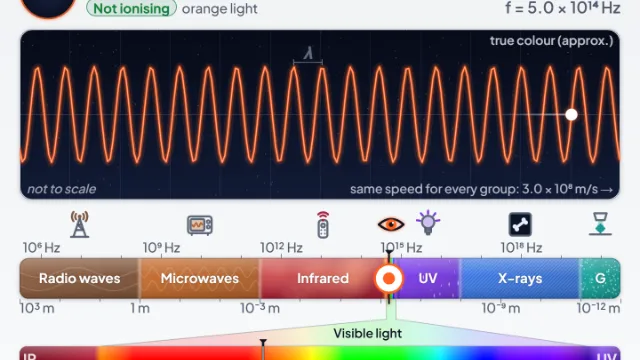
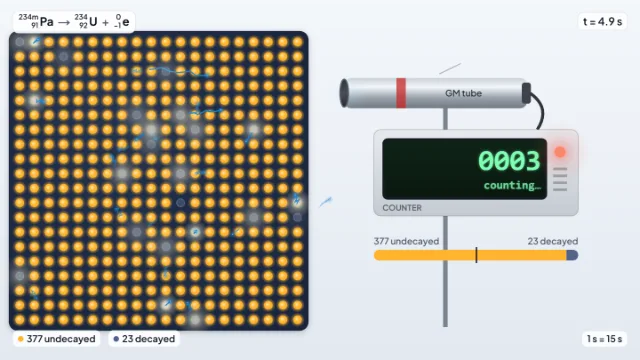
Every "review" should be a test, not a reread: a blurt, a chapter quiz or a set of exam-style questions. Our retrieval practice guide explains how. For a test of radioactivity, for example, write out alpha, beta and gamma properties from memory, then check a half-life reading with the half-life simulation.
Fewer weeks left? Shrink the gaps in proportion. With four weeks to go, check each topic the next day and review it again about a week later.
How does a Leitner box work for equations?
In the 1970s the German science writer Sebastian Leitner described a simple flashcard system in his book So lernt man lernen ("How to learn to learn"). You need a box with five sections and a set of cards. A common schedule is:
- Section 1: every day;
- Section 2: every 2 days;
- Section 3: every 4 days;
- Section 4: every week;
- Section 5: every 2 weeks.
All new cards start in section 1. When you answer a card correctly, move it up one section. When you get it wrong, it goes back to section 1, however high it was. Hard cards come round often and easy ones spread out, so you get spaced practice without planning it. Cards that reach section 5 still get tested, which matters: in a 2008 study, dropping known items from testing left students recalling far less a week later.
Physics equations make ideal cards. Some examples:
- Front: kinetic energy from mass and speed. Back: , with energy in J, mass in kg and speed in m/s.
- Front: power from energy and time. Back: ; W, J, s.
- Front: charge from current and time. Back: ; C, A, s.
- Front: wave speed from frequency and wavelength. Back: ; m/s, Hz, m.
Add a second card for each equation that asks you to rearrange it, such as "make the subject of ". Our AQA recall list has every equation you need. For chemistry, put a formula or definition on each card: the charge on a sulfate ion, the test for hydrogen, or the meaning of an exothermic reaction.
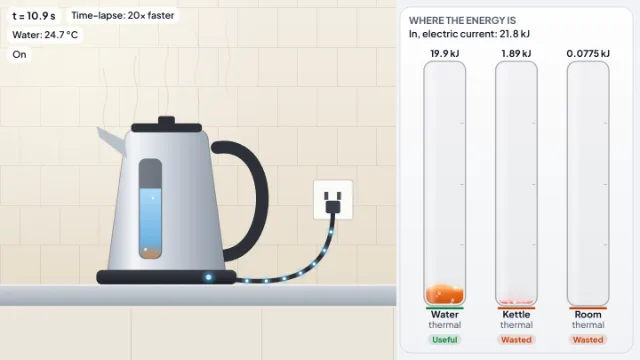
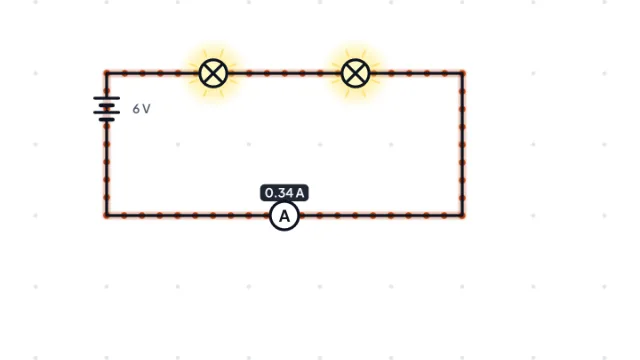
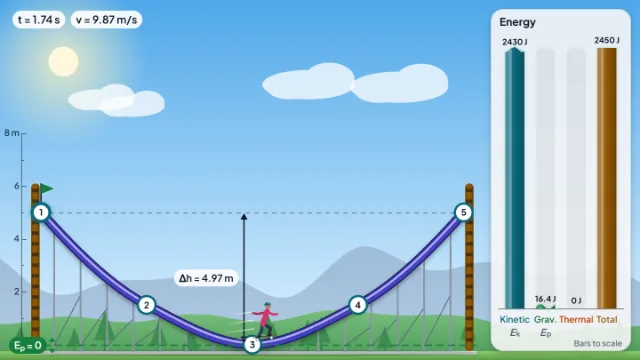
Then use the equations, not just recite them. Try the energy stores simulation or the circuit builder simulation and predict the numbers before you change anything.
Common mistakes
- Spacing your reading but not your testing. A spaced reread is better than a massed one, but a spaced self-test is better still.
- Gaps that are too short. Reviewing the same topic three nights in a row is still cramming.
- New topics up to the last day. Stop learning new material a few weeks before the exam so every topic gets reviewed.
- Losing the timetable. Write review dates in a calendar the day you first learn a topic.
- Retiring cards. Keep even your easiest cards in the box.
Is cramming the night before ever useful?
Cramming can lift a score on a test the next morning, but it fades fast. For exams that cover months of work, spaced reviews do far more.
How many times should I revise each topic?
Aim for at least three visits after first learning it: a quick check within a couple of days, then two spaced reviews. Topics on your mistakes list get extra visits.
Can I use an app instead of a box?
Yes. Many flashcard apps use the same idea and schedule cards for you. The method matters more than the tool: answer before you flip, and be honest about what you got wrong.
How does spacing fit with other study methods?
Spacing tells you when to revise, and self-testing tells you how. For a week-by-week routine that combines both, read which study methods actually work.